
Why so many people with stiff, achy joints are quietly trying this hands-free light therapy wrap
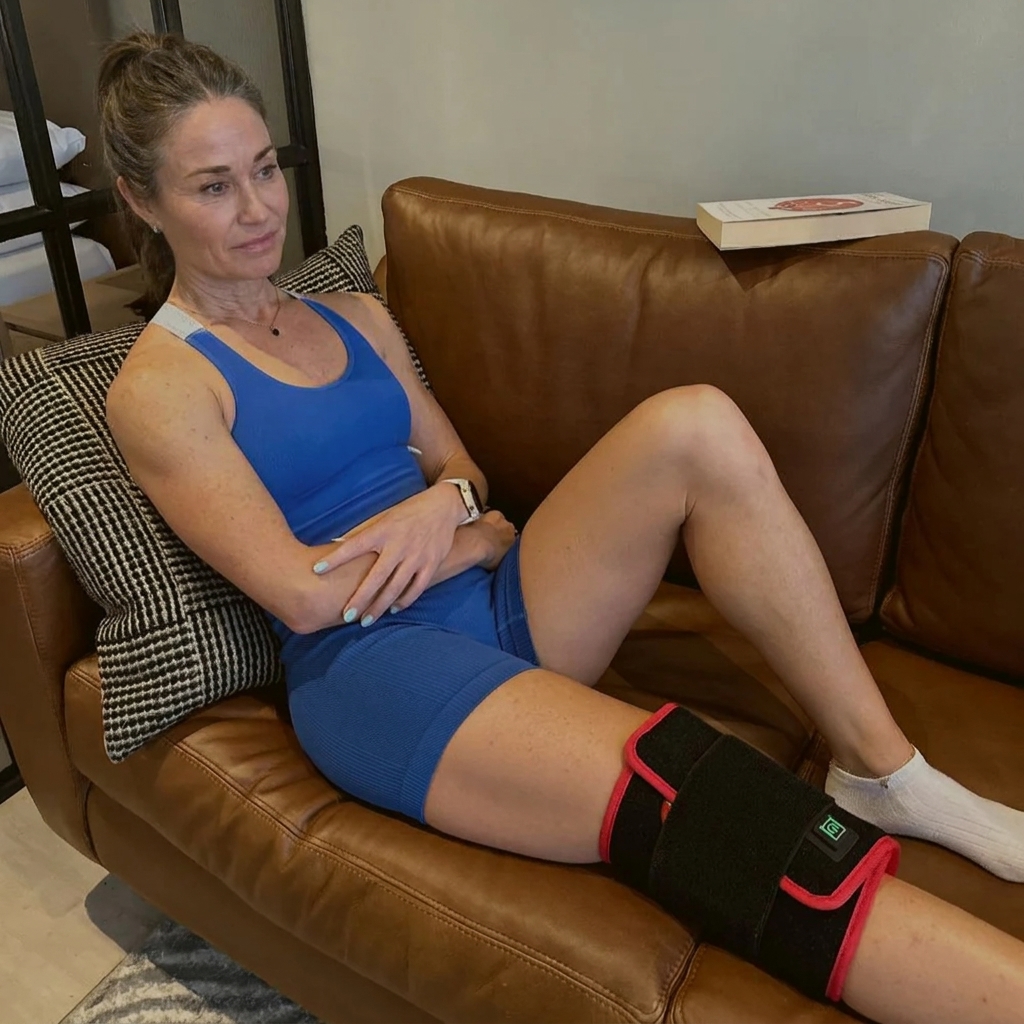
"I haven't slept through the night in two years because of my knees. By the time I finally fall asleep, they ache enough to wake me again. I've tried everything my doctor suggested."
That's from a 63-year-old woman in an online joint health community. She had over 400 people reply with some version of "me too." Not because morning joint stiffness is rare — the CDC estimates 53 million American adults live with it in some form — but because most of what gets recommended for it only works on the surface, for a little while, and then stops.
Heating pads help in the moment. Ibuprofen takes the edge off. The compression sleeve reminds you it's there. But every morning, the stiffness is back. Because none of those approaches interrupt the underlying cycle. They manage symptoms. They don't reset the loop.
That's the part a growing number of people are starting to understand — and why a hands-free wearable light therapy wrap called WREN is quietly showing up in conversations about morning joint comfort. Not because it's a miracle. But because it's the first approach that targets what's actually happening at the cellular level, in the time they already have, without adding another step to their day.
Here are the five reasons people managing chronic joint stiffness are switching — and why the science behind it holds up.
 The Cellular Reset Loop™
1. Your joints aren't "just getting older." They're stuck in a loop.
"I used to think this was just aging. My doctor gently told me it's not that simple — it's a cycle, and the cycle can be interrupted."
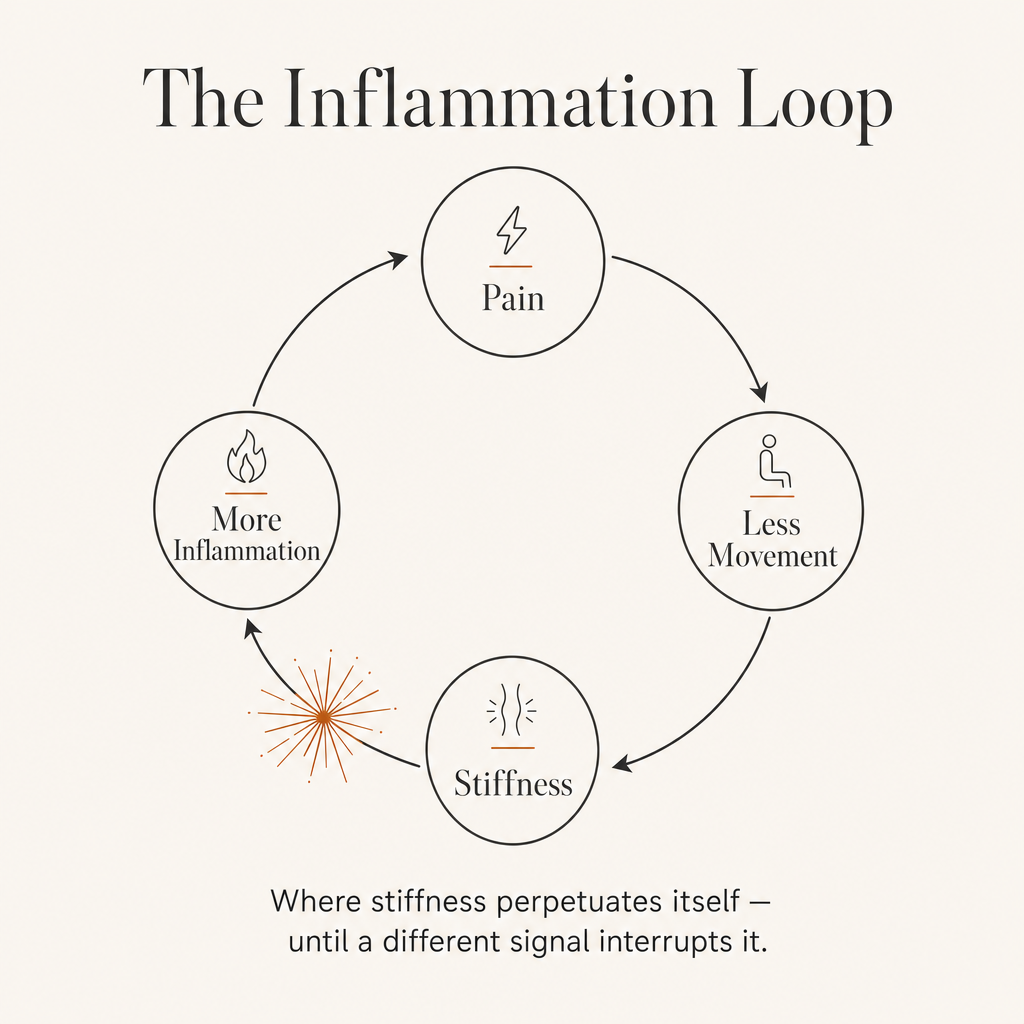
Here's what's actually happening in a stiff, uncomfortable joint: inflammation signals discomfort. Discomfort leads to reduced movement. Reduced movement decreases blood flow and the delivery of nutrients to the joint tissue. That decreased nourishment makes the inflammation worse. Which signals more discomfort. Which reduces movement further. Round and round.
This is the chronic joint stiffness cycle — and it's why people who "rest it" often wake up feeling worse, not better. It's also why ibuprofen and heating pads don't hold: they interrupt one moment in the loop but leave the rest of it running.
What researchers call photobiomodulation — targeted light therapy — works differently. Specific wavelengths of light (660nm and 850nm) activate an enzyme in your cells called cytochrome c oxidase, which supports mitochondrial function and ATP production. In plain terms: it signals your cells to shift from inflammation mode into repair mode. That's not a symptom patch. That's a cellular signal that interrupts the loop itself.
After years of trying everything else, a lot of people are discovering that this is the part they were missing.
 The Cellular Reset Loop™
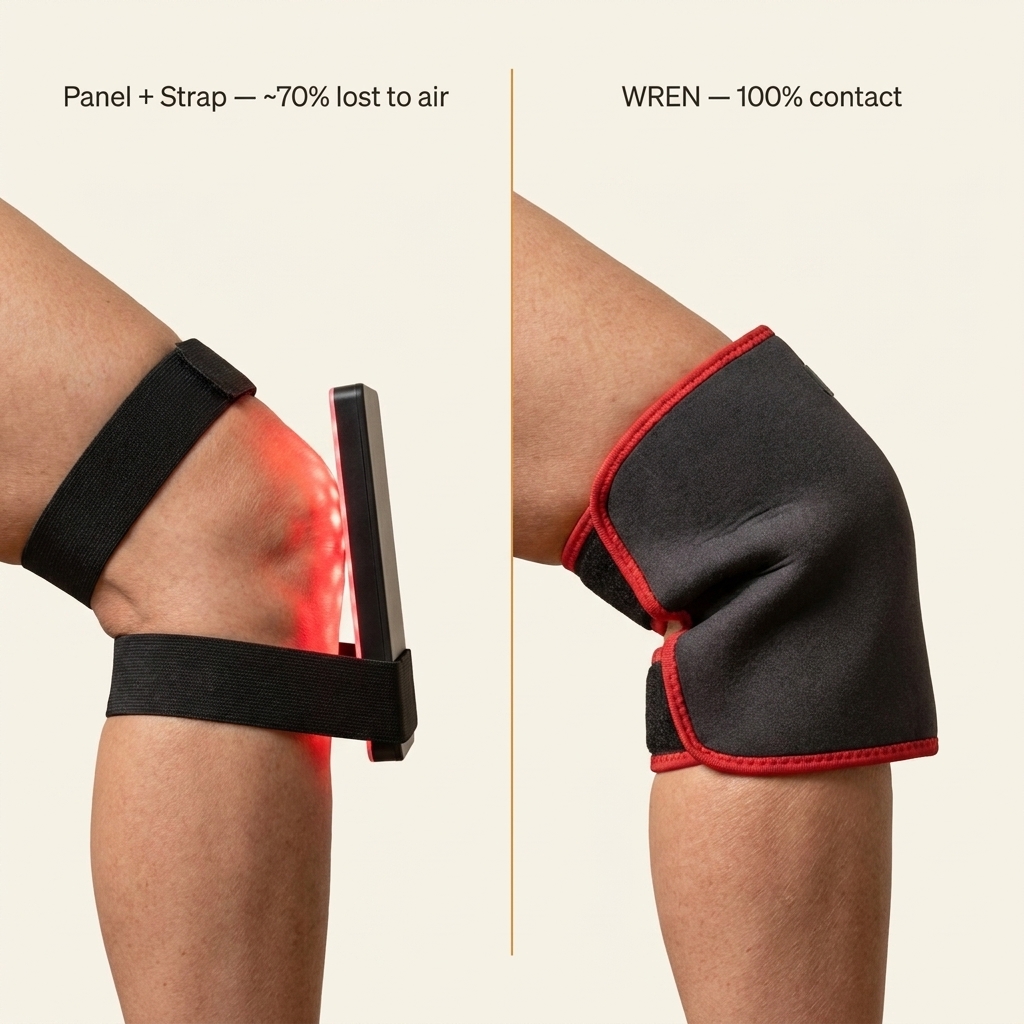
2. Most light therapy devices lose up to 70% of the dose before it even reaches your joint.
"I spent $350 on a red light panel. Felt nothing. Then someone explained the distance problem and everything clicked."
If you've ever tried a standing red light panel and wondered why nothing seemed to happen, there's a physics reason nobody in that industry likes to talk about. Light intensity drops with the square of the distance — double the distance, lose roughly 75% of the dose. A panel sitting eight inches from your knee is delivering a fraction of what's printed on the box to your actual joint tissue. The rest disperses into the room.
WREN's wrap sits directly against the skin. Zero distance. No loss. That's not a small difference — it's the difference between a therapeutic dose and a decorative glow. The 660nm wavelength reaches the surface joint tissue and tendon layer where morning stiffness often starts. The 850nm wavelength penetrates deeper into the joint structure, the layer that tends to ache when you stand up or climb stairs.
Both wavelengths, both layers, where they're actually needed — that's the cellular reset signal delivered properly. Many people who tried a panel and gave up on light therapy haven't tried what happens when the light actually reaches the tissue.
 The Cellular Reset Loop™
3. Your body's deepest joint repair happens overnight. WREN primes it in 20 minutes before bed.
"I do my 20 minutes during the evening news. By morning, my knees feel like they've slept it off."
Your body does its most active cellular repair work overnight. Cortisol drops. Growth factors rise. The immune system shifts into maintenance mode. Joints that spent the day under load finally get the chance to recover — if you've given them the right signal first.
WREN was built around exactly that window. A standing panel sits in a corner of the room. A TENS unit needs leads and adjustment. Heating pads stay on for ten minutes and then need refilling. WREN's wrap is low-heat, low-EMF, and designed for a single 20-minute evening session — directly over the joint that needs the support most, right before your body does its overnight work anyway.
The result: the Cellular Reset Loop does its work in the hours your body is already primed for it, without asking you to add anything to your day. You do 20 minutes after dinner. You take it off. You go to bed how you've always gone to bed. The difference, for people who've used it consistently for four to eight weeks, tends to show up in those first steps out of bed — when morning joint stiffness usually announces itself.
You sleep how you've always slept. Your joints get the cellular signal in the evening. That's the whole protocol.
 The Cellular Reset Loop™
4. Most wearable wraps were designed as panels with straps. WREN was designed for contact from the start.
"There's a difference between something built for your lifestyle and something that was an afterthought. You can feel it in how it's designed."
When wearable red light therapy wraps first appeared, most of them were exactly what they look like: a panel with a Velcro strap attached. The LED positioning, power levels, and beam angles were calibrated for the same 8-inch distance as a panel. Pressing them against skin was an afterthought — and at 0mm, those crossed beams deliver uneven, suboptimal dose distribution across the joint surface.
WREN was engineered the other way around: skin contact as the primary design constraint, not an add-on. LEDs oriented for zero-distance delivery. Power density calibrated for what reaches tissue at contact, not what looks impressive on a spec sheet. A flexible body that conforms to the curve of a knee, lower back, or hip — the areas where people typically need the most support.
For chronic joint discomfort, that engineering difference matters. A device built to interrupt the Cellular Reset Loop needs to actually deliver the signal cleanly, every session, without gaps in coverage or hot spots. That's what the contact-first design achieves.
 The Cellular Reset Loop™
5. It's drug-free, hands-free, and doesn't ask you to stop what you're doing.
"After years of trying everything... this is the first thing that doesn't feel like a chore. I put it on and watch my show. That's it."
Many people managing chronic joint stiffness already know the long-term downside of ibuprofen and naproxen. Their doctor may have mentioned GI risk. Or kidney function. Or cardiovascular considerations with extended use. They want out of the daily pill cycle — but they haven't found something that actually works without it.
WREN is drug-free and non-invasive. There's no dependency, no stomach lining consideration, no timing with food. The Cellular Reset Loop mechanism works by light signal, not chemistry — which means it supports the joint without adding anything to your bloodstream.
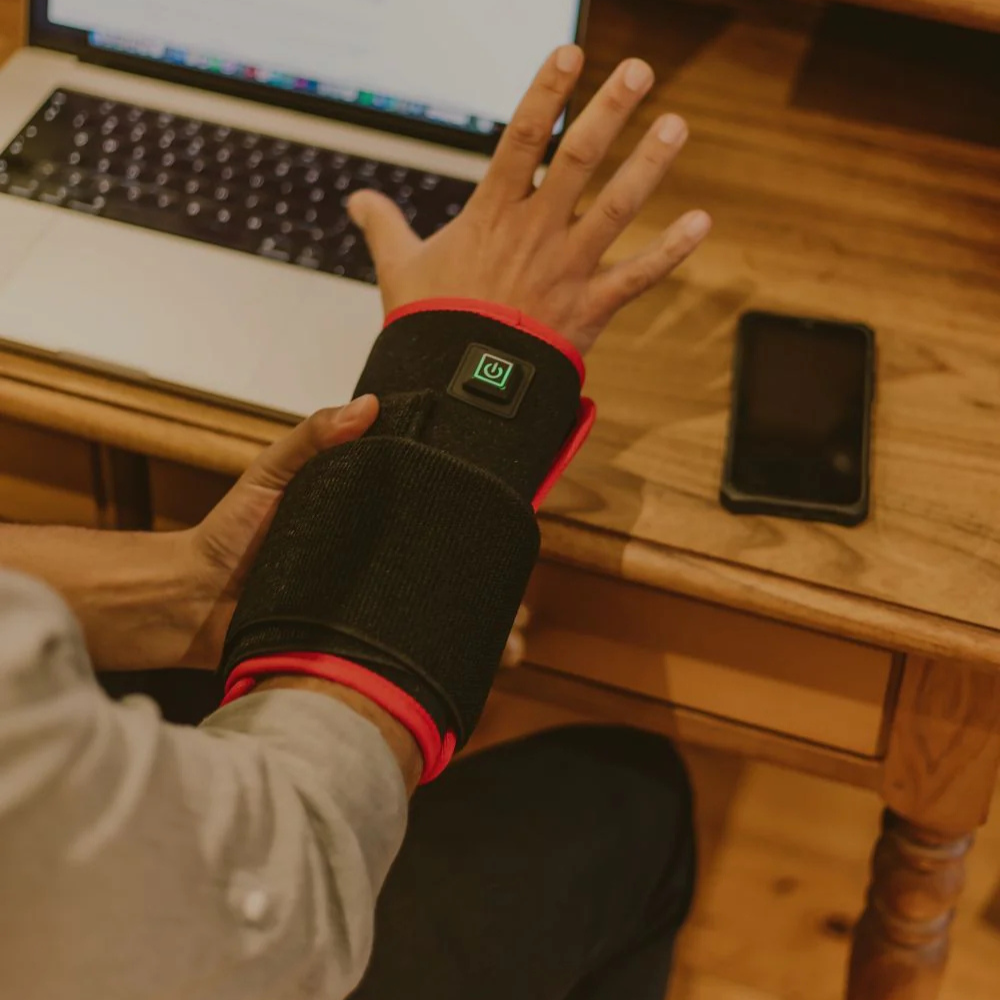
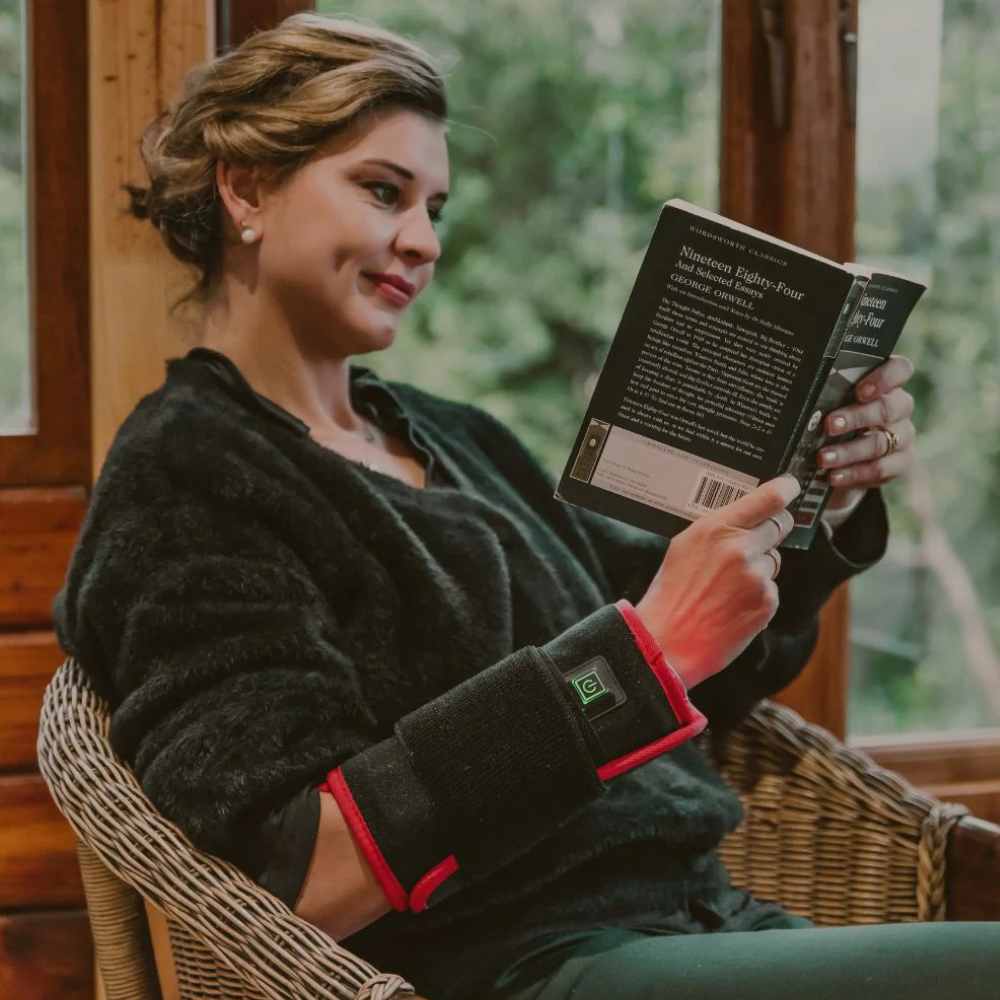
And because it's hands-free, it fits into life as it actually is. You wear it during the evening news. While you read. While you have a conversation. 20 minutes, then you take it off — and the only protocol you're following is one you were already doing (sitting on the couch in the evening), except now it's doing something at the cellular level instead of a heating pad you have to keep adjusting.
A lot of households end up keeping two on hand. One for the knee, one for the shoulder. Or one for you and one for the spouse who was watching you use it and quietly making peace with the fact that they could use one too. It's not a hard sell — it's what naturally happens when something actually works in a house with more than one set of stiff joints in it.
That's why people who try WREN tend to stick with it. Not because it asks very little. Because it finally delivers on the thing everything else promised.
The cost math, honestly.
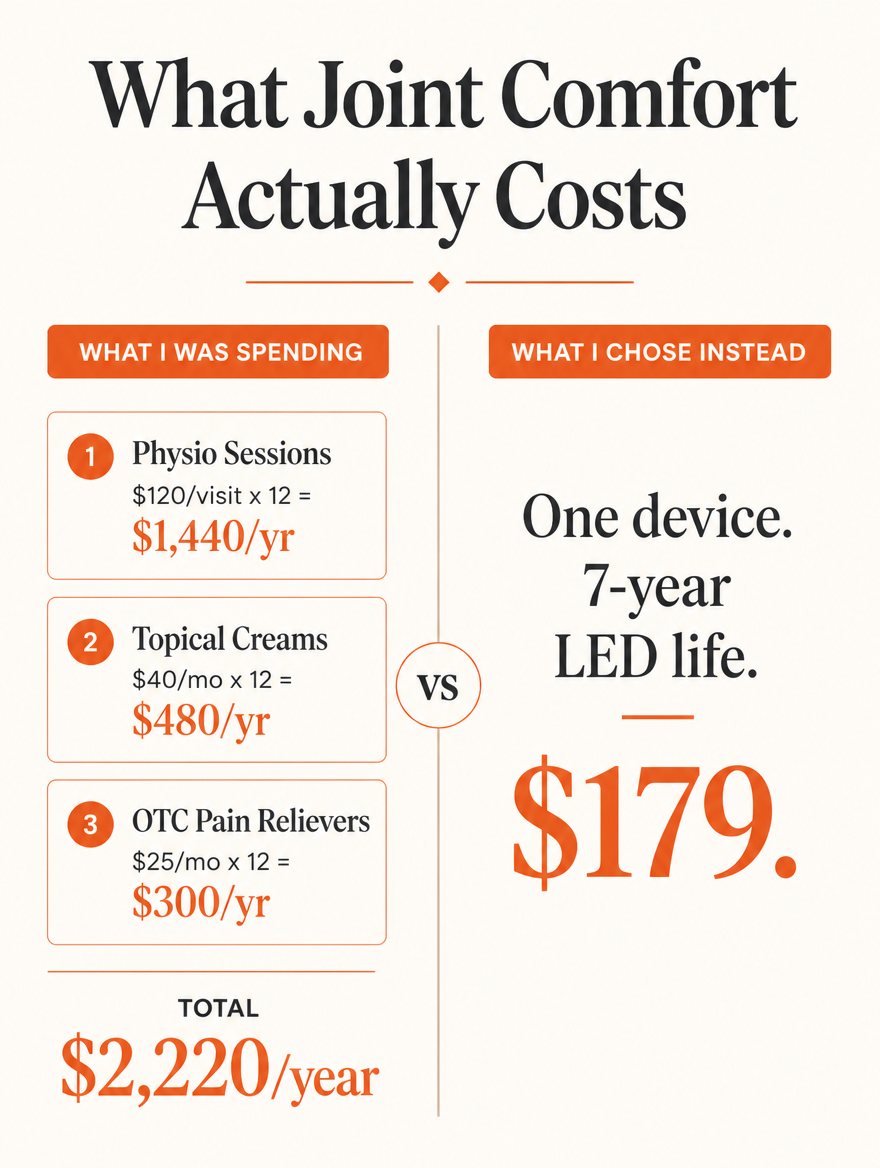
Managing chronic joint stiffness adds up quietly. A physio appointment at $110–$150 — even twice a month — is $2,640–$3,600 a year. Add a regular supply of OTC pain relievers, a heating pad every couple of years, and compression sleeves that wear out — and many people are spending $3,000–$4,500 annually on things that manage the symptom but don't interrupt the underlying cycle.
WREN is a one-time purchase. No sessions to schedule. No recurring prescriptions. No pharmacy run on a Sunday when the stiffness is bad. The LED array is rated for seven-plus years of use.
The mechanisms are genuinely different — physio addresses specific structural and mobility issues; OTC medication suppresses inflammation chemically; WREN targets the Cellular Reset Loop at the mitochondrial level. They're not interchangeable. But the question worth sitting with is: after years of managing symptoms with things that don't hold, what would it be worth if something interrupted the cycle?
That's the calculation more people are making right now.
What people who've used it say
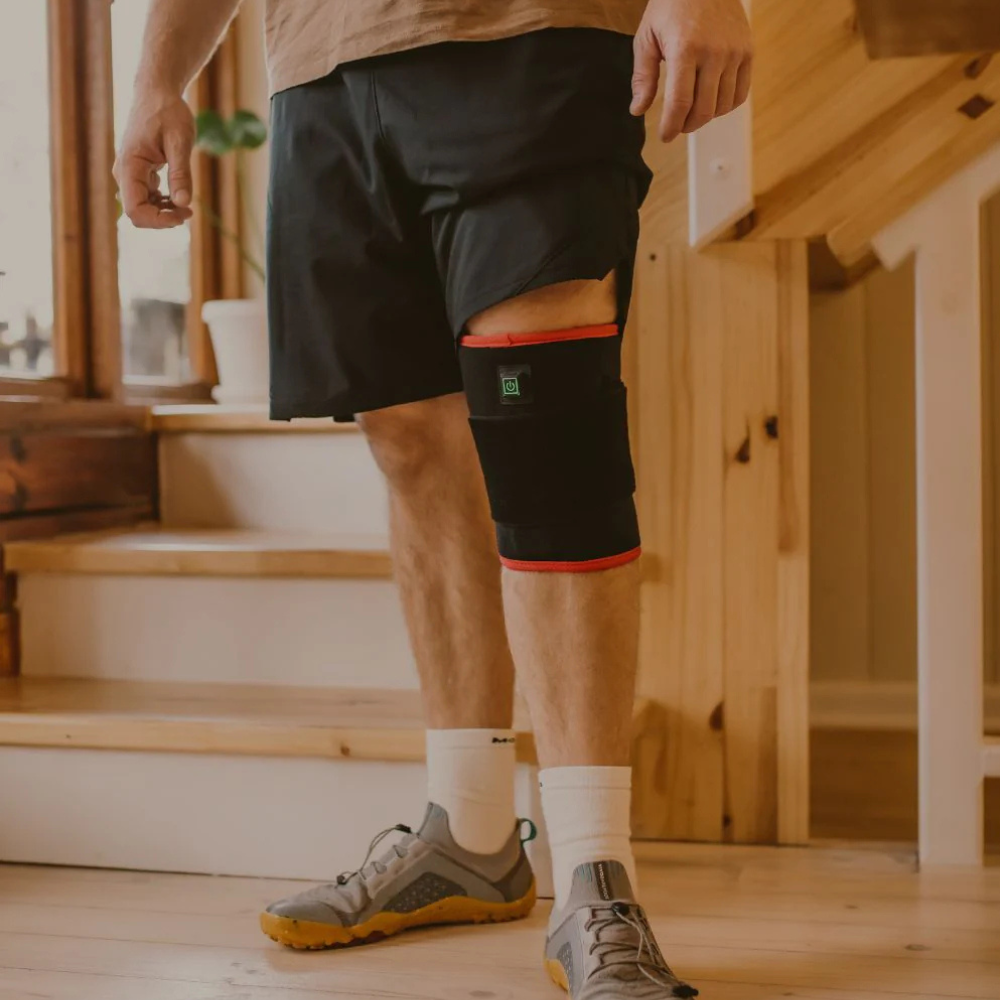
I've had morning knee stiffness for about four years. I tried the heating pad, the compression sleeve, the glucosamine — you name it. My daughter saw WREN and bought it for me as a birthday gift, honestly as a bit of a joke. Eight weeks later I'm not joking. The first steps out of bed in the morning are different. Not gone, but noticeably easier. I do my 20 minutes during the evening news. It's become my routine now.
Results may vary.
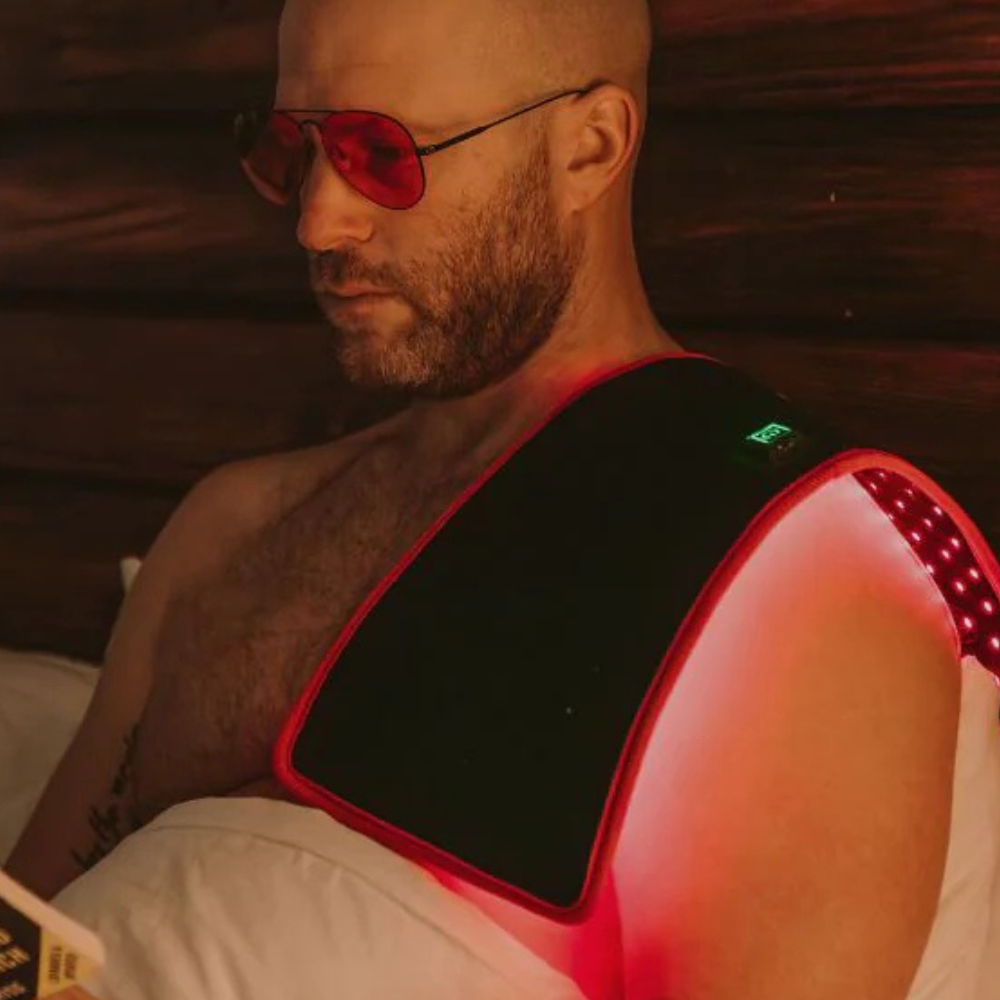
My back and right knee have been a problem since my late 50s. I take ibuprofen less than I used to — that alone is worth it to me, because I know it's not great long-term. The Cellular Reset Loop concept made sense to me after I read the science. I do 20 minutes after dinner — TV's on, I'm sitting anyway. Six weeks in and my mornings start a little slower, a little easier. I'm a skeptic by nature. I'm a believer now. (My wife ended up doing 20 minutes on her shoulder right after me. We're a two-wrap household now.)
Results may vary.
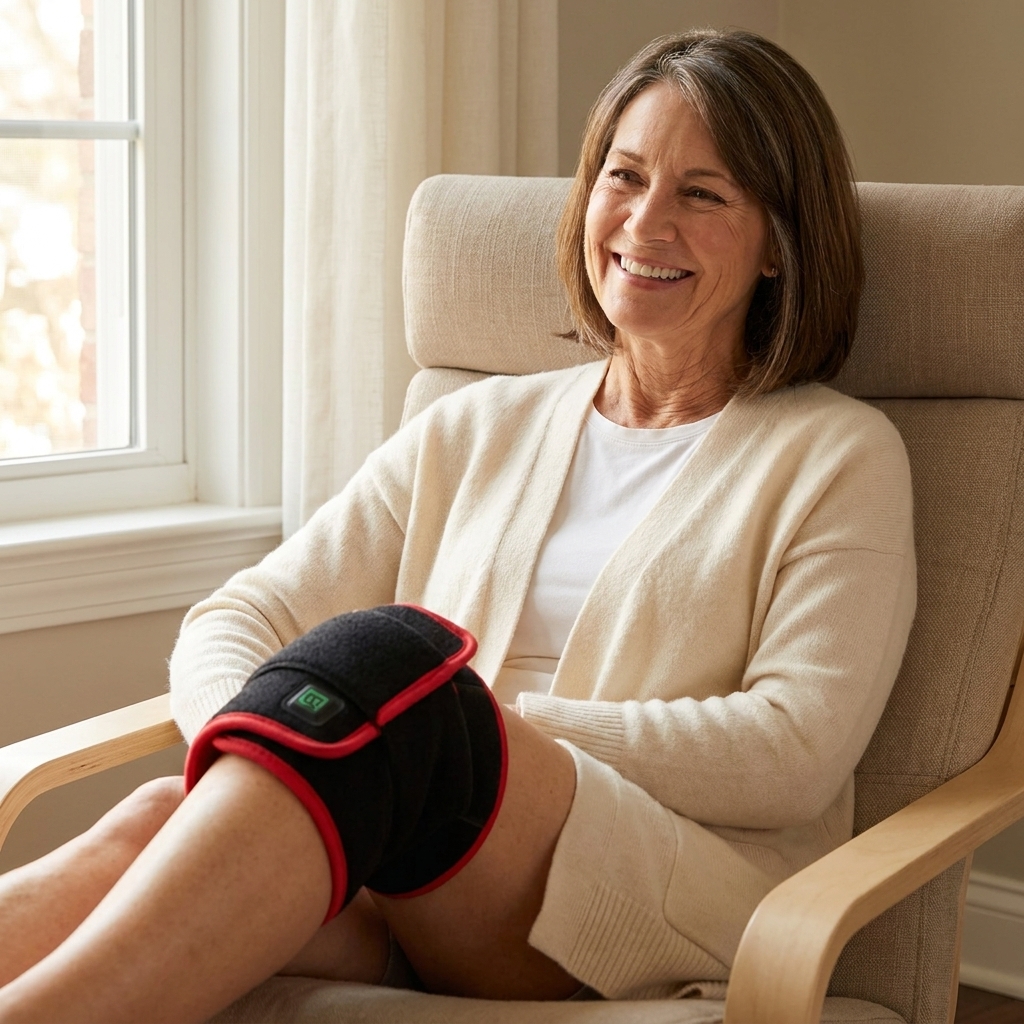
I was hesitant. I've tried a lot of things and I'm tired of being disappointed. My physical therapist actually mentioned light therapy to me a while back and I never followed up. When I finally tried WREN, the part that got me was that I don't have to do anything differently — I just put it on during my evening show. Twelve weeks in and I genuinely look forward to mornings in a way I haven't for years. The stiffness ritual that used to take 30 minutes is down to maybe five.
Results may vary.
WREN — hands-free light therapy wrap for joint comfort support
Check availability & pricing
After years of trying everything, it might be time to try something that interrupts the cycle.
If you wake up with stiff joints most mornings, you're probably not looking for another product that temporarily softens the symptom. You're looking for something that actually changes what's happening. The Cellular Reset Loop is the science behind why everything else didn't hold — and why a different approach works differently.
WREN is a hands-free, drug-free light therapy wrap built for people who've tried the other things. See the pricing, the specs, and what other people are saying about it on the product page.